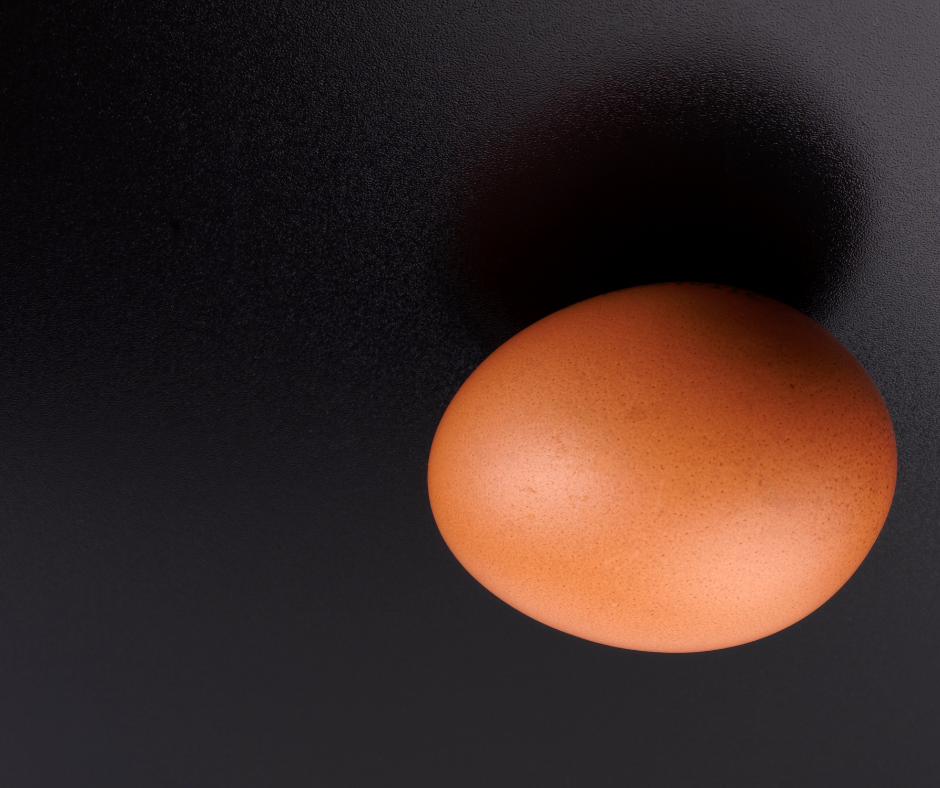
The Evolution of Chicken Egg Shapes
Have you ever noticed that not every chicken egg is exactly the same shape? Some are rounder, some are longer, and others have a more pointed or slightly unusual end. While the classic oval chicken egg is instantly recognisable, the shape of an egg is the result of fascinating biology, genetics and evolution.
The chicken egg has evolved into a shape that provides an effective balance between strength, protection and efficient laying. The familiar oval form, with one end slightly narrower than the other, allows eggs to fit neatly together while reducing the likelihood of them rolling far away if they are disturbed.
But why aren’t chicken eggs perfectly round?
A completely round egg could roll in any direction, potentially making it easier for an egg to move away from the nest. The asymmetrical shape of a chicken egg means that when it rolls, it tends to move in a curved path rather than travelling in a straight line. This can help keep the egg closer to where it was laid.
Chicken egg shape is also closely linked to the hen’s reproductive system. An egg begins forming in the ovary, where the yolk develops before being released into the oviduct. As it travels through the oviduct, the albumen, membranes and shell are gradually added. The shell is formed during the final stage, and the shape of the egg is influenced by the movement and structure of the reproductive tract.
Interestingly, genetics play a major role in determining egg shape. Different chicken breeds and individual hens can naturally produce eggs with different proportions. Egg shape can be described using measurements such as length and width, with the ratio between these measurements helping determine whether an egg is relatively round, oval or elongated.
Age can also influence shape. Young hens beginning to lay may produce smaller or unusually shaped eggs as their reproductive systems mature. Occasionally, hens may produce eggs with ridges, wrinkles, flattened areas or other irregularities. These can be caused by natural variations during shell formation and do not always indicate a problem.
Nutrition, environmental conditions, stress and the health of the hen can also influence egg formation and shell quality.
The humble chicken egg therefore has much more science behind its shape than we might expect. Every curve, point and proportion is influenced by the hen, her genetics and the remarkable biological process that creates an egg.
So next time you pick up a chicken egg, take a moment to look at its shape. That familiar oval is not accidental, it is the result of millions of years of evolution and an incredibly sophisticated reproductive process.